


18-year-old Ruqaiyya explains the United Nations’ historic resolution condemning the slave trade
On 25 March, in a landmark resolution, the United Nations general assembly declared the transatlantic slave trade “the gravest crime against humanity”.
This article explores the resolution, the prominent voices behind it, the countries that resisted it, and its potential implications for the long-term appeal for reparations.
Harbingers’ Weekly Brief
Subscribe to the Harbingers’ Weekly Brief, a newsletter written by the editorial board of Harbingers’ Magazine, the world’s youngest newsroom, delivered to your inbox every Monday morning.
![slide image]()
![author_bio]()
![author_bio]()


What did the UN declare?
The resolution, proposed by Ghana and supported by the African Union and the Caribbean Community (CARICOM), was passed by the UN General Assembly on 25 March, which is the International Day of Remembrance for the Victims of Slavery and the Transatlantic Slave Trade.
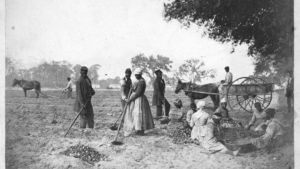
It recognised the transatlantic trade of enslaved Africans as a severe crime. Between the 15th and 19th centuries, up to 15 million people were forcefully taken from their homes in Africa and transported to the Americas, where they were forced to work as slaves under harsh conditions. Two million people died on the journey.
The resolution also urged UN member states to participate in earnest discussions regarding reparatory justice.

It called for the swift reimbursement of cultural artefactssuch as artworks, monuments, museum items, documents and national archives to their respective countries of origin, free of charge.
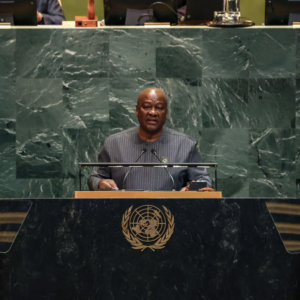
Ghana’s president John Dramani Mahama, the African Union Champion for Reparations, addressed the general assembly before the vote:
“This resolution allows us as a global community to collectively bear witness to the plight of more than 12.5 million men, women and children whose homes, communities, names, families, hopes, dreams, futures and lives were stolen from them over the course of 400 years.”
How did the vote go?
The UN General Assembly Hall was filled with applause as member states passed the resolution.
The resolution received 123 votes in favour and 52 abstentions including all 27 European Union countries. Three countries – Argentina, Israel, and the United States – voted against it. (Not all of the 193 member states took part in the vote.)
What were the reasons for the opposition?
The United States opposed the vote with deputy US ambassador Dan Negrea describing the resolution text as “extremely problematic in numerous ways”, dismissing any legal rights to reparations for actions that were not considered illegal under international law at the time they took place.
The European Union maintained a position of abstention. Gabriella Michaelidou, Cyprus’s deputy UN ambassador, raised concerns on behalf of the EU regarding the retroactive enforcement of international law and the lack of legal basis for a hierarchy among crimes against humanity.
Who spoke for the victims?
UN general assembly president Annalena Baerbock said: “We must be tireless in pursuit of justice, ensuring that we remain active participants in the pursuit of dignity, accountability and equality across generations.”
UN secretary-general António Guterres called for more courageous actions from member states. “We cannot continue to tolerate racial violence or bigotry. We cannot keep letting inequality and injustice be ignored. We must turn memory into progress and remembrance into responsibility,” he said.
One of the most remarkable comments came from the inaugural poet laureate of Barbados, Esther Philips. She said:
“There are spirits of the victims of slavery present in this room at this moment, and they are listening for one word only: justice. The question is, what will you do?”
Has the world seen this before?
General assembly resolutions are not legally binding, yet this does not make them insignificant as they carry political weight and are a reflection of world opinion.
Ghana’s foreign minister, Samuel Ablakwa, mentioned that the resolution could still open the door for a formal reparative framework: “History does not disappear when ignored, truth does not weaken when delayed, crime does not rot … and justice does not expire with time.”
The most renowned precedent is Germany’s reparations for the Holocaust. In 1951, West German chancellor Konrad Adenauer gave a noteworthy speech in the Bundestag, during which he asked for forgiveness for the atrocities committed by Nazi Germany.
In 1952, West Germany entered into the Luxembourg Agreement with Israel, guaranteeing financial compensation to Holocaust survivors. Since the agreement Germany has paid approximately $80bn to Holocaust victims.
View this post on Instagram
What are the victim nations demanding?
Established in 2013, the CARICOM Reparations Commission has developed a ten-point plan that serves as a systematic framework for reparatory justice. Aimed at former colonial powers involved in the slave trade, this plan demands a complete formal apology, as well as repatriation rights for the descendants of enslaved Africans.
It also mentions psychological rehabilitation for communities that continue to suffer from the trauma of centuries of enslavement; support in tackling the Caribbean’s ongoing public health crisis (including the highest global rates of hypertension and type 2 diabetes); and the cancellation of debts that CARICOM proclaims belong to imperial governments.
Since this is a non-binding resolution, its implementation depends entirely on the political determination of member states.

Edited by:

© 2026 The Oxford School for the Future