Harbingers’ Magazine is a weekly online current affairs magazine written and edited by teenagers worldwide.
harbinger | noun
har·bin·ger | \ˈhär-bən-jər\
1. one that initiates a major change: a person or thing that originates or helps open up a new activity, method, or technology; pioneer.
2. something that foreshadows a future event : something that gives an anticipatory sign of what is to come.
We and our partners may store and access personal data such as cookies, device identifiers or other similar technologies on your device and process such data to personalise content and ads, provide social media features and analyse our traffic.
You don’t really know someone until you have missed a train with them.
Travel is often imagined as the ultimate bonding experience involving sunsets, shared meals, laughter, deep late talks, inside jokes and memories that last a lifetime. But there might be an ugly side to it that people don’t talk about as often.
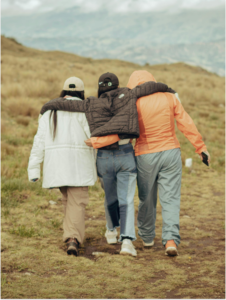
When you travel with friends, you are not only exploring and discovering new things: you are seeing new sides of one another. This includes uncovering parts that everyday life tends to hide.
In day-to-day routines, friendships can feel easy. You meet for a few hours, hang out, then go home and recharge. But travelling takes flexibility. Suddenly, you’re making constant decisions together. Where to go? What to eat? How to spend the money? These seemingly small choices can – and probably will – become sources of tension.
Under pressure, personality traits become more visible: patience and empathy are tested while selfishness and indecisiveness stand out more than ever before.
I experienced this myself on a two-week trip to Italy with a close friend. Before our trip, our friendship seemed balanced and comfortable – or so I thought.
During the journey, I began to feel more like an afterthought than an equal participant. Plans were made without my consent, and my opinions seemed secondary. Regardless of my efforts to communicate my needs clearly, she shut me down.
What was supposed to be a collection of fun, shared adventures slowly turned into something sad. It wasn’t a dramatic fallout, but it was enough to make me question the friendship.
This type of situation is more common than people admit or talk about. I suppose travel introduces stress, unfamiliar environments and drama. Inevitably, one person might want to carefully plan everything, while the other prefers spontaneity and surprise.
Harbingers’ Weekly Brief
Subscribe to the Harbingers’ Weekly Brief, a newsletter written by the editorial board of Harbingers’ Magazine, the world’s youngest newsroom, delivered to your inbox every Monday morning.
See you on Monday!
Ooops - please try again.
Science suggests that new environments tend to amplify how people cope with stress. When familiar routines are disrupted, people tend to rely more heavily on their typical ways of handling stress. Some may become more controlling in an effort to create stability, while others withdraw or avoid conflict to manage tension.
These behaviours aren’t new, they’re existing patterns that become more visible under pressure. Travel, in particular, makes this clearer because people are spending extended time together with limited space and few chances to step away.
On the other hand, this doesn’t mean you shouldn’t travel with friends. In fact, it can be incredibly valuable. These experiences provide clarity and help you understand not only who your friends are, but also what you need in this relationship.
Difficult or unexpected situations can also help you communicate and understand each other, which is the key to a healthy friendship. Some trips can strengthen friendships and some can ruin them, even if you try everything in your power not to do so.
Sometimes, travel strengthens bonds through shared challenges. Sometimes, it exposes cracks that were already there.
The key is preparation and honesty. Before travelling, talk openly about expectations so there won’t be any big surprises. During the trip, communicate openly instead of making assumptions, and be honest about how you feel so frustration doesn’t build. Take time to reflect – if something feels off, it’s worth asking why. If it’s not a big deal for you, it can be for others.
Travel doesn’t ruin friendships, it reveals them. And sometimes, what you discover is exactly what you needed to see.
Curious about both creativity and global affairs, Carla, born in 2010, is based in Yerevan, Armenia.
Her interests range from fashion and painting to politics and psychology, reflecting a wide intellectual and artistic curiosity. In the future, she hopes to study Business or Fashion Design.
Fluent in Armenian and English, Carla is currently learning Turkish and is considering adding German to her studies. For her, languages are not only practical skills but also a way to better understand cultures and perspectives.
For Harbingers’ Magazine, she writes about international affairs, politics, society, books, films and psychology.
In her free time, Carla enjoys reading, painting, watching films and travelling, always seeking new experiences and opportunities to challenge herself.
🌍 Join the World's Youngest Newsroom—Create a Free Account
Sign up to save your favourite articles, get personalised recommendations, and stay informed about stories that Gen Z worldwide actually care about. Plus, subscribe to our newsletter for the latest stories delivered straight to your inbox. 📲
We use cookies to ensure that we give you the best experience on our website. If you continue to use this site we will assume that you are happy with it.