Harbingers’ Magazine is a weekly online current affairs magazine written and edited by teenagers worldwide.
harbinger | noun
har·bin·ger | \ˈhär-bən-jər\
1. one that initiates a major change: a person or thing that originates or helps open up a new activity, method, or technology; pioneer.
2. something that foreshadows a future event : something that gives an anticipatory sign of what is to come.
We and our partners may store and access personal data such as cookies, device identifiers or other similar technologies on your device and process such data to personalise content and ads, provide social media features and analyse our traffic.
Last month, I was eating lunch with my family when my dad mentioned that population growth was one of the leading causes of climate change.
It was a simple comment, but it left me wondering whether population size is our problem, or whether it is how much humanity consumes?
We are increasingly concerned about climate change, and population growth is often talked about as an important factor in that process. However, another factor may be pushing climate change much more than we realise: our relentless need for more.
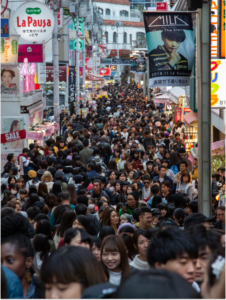
There is no denying that a continuously growing population directly affects how much pressure there is on the planet. More people require more land, water, food and infrastructure, all of which require an extensive amount of resources.
The United Nations predicts that the global population will peak at approximately 10.3 billion people in the 2080s, and then decline slightly. As of 2024, the global fertility rate has dropped to 2.3 children per woman, one child less than the average in 1990.
Yet, while population growth is slowing, our demand for resources continues to rise. According to the UN’s Global Resource Outlook report from 2024, global material extraction more than tripled between 1970 and 2020, from 30.9 billion tonnes to 95.1 billion tonnes. Our growing dependence on and demand for resources is leading to a significant rise in greenhouse gas emissions and environmental degradation.
This increase poses an important question: are we consuming more because we need more, or because we have become used to wanting more?
Modern life often encourages us to associate progress with having and producing more. Businesses aim to increase sales, economies depend on continuous growth, and advertising constantly encourages people to replace, upgrade and buy.
New products can improve our lives, but this cycle also requires more energy and raw materials. The problem, then, may not simply be how many people there are but a system that encourages constant consumption or even overconsumption.
Across the globe, our consumption and environmental impacts are far from equal. In 2022, developed countries produced nearly twice as much greenhouse gas emissions per person as developing countries, and over four times as much as the world’s poorest countries.
Harbingers’ Weekly Brief
Subscribe to the Harbingers’ Weekly Brief, a newsletter written by the editorial board of Harbingers’ Magazine, the world’s youngest newsroom, delivered to your inbox every Monday morning.
See you on Monday!
Ooops - please try again.
Reducing population growth, however, cannot be considered a simple solution. Decisions about family planning are choices to be made by individuals. Attempting to control these decisions raises ethical questions about freedom and reproductive choice.
Making education, healthcare and family planning more accessible can help people make informed decisions about their futures without turning population reduction into a policy imposed on them.
Rather than solely concentrating on how many people there are and how much longer the planet can support them, we should reconsider how sustainably we use the resources that are already available to us.
Reducing waste, using less resource-intensive products and investing in cleaner technologies are all practical first steps towards addressing climate change. These steps do not mean losing all our progress; they allow us to continue improving our lives without leaving an enormous environmental footprint behind.
My conversation with my dad began with one simple statement about the world’s population. It has left me with a much broader and more complicated question: our greatest challenge is not trying to make space for more people, it’s learning how to live well without always wanting more.
Maya is a student in the canton of Valais, Switzerland. Born in 2011, she has a keen interest in music, pop culture, politics and psychology, and hopes to study law or psychology in the future. For Harbingers’ Magazine, she writes about politics, psychology and society.
In her free time, Maya enjoys playing a range of musical instruments, going for walks outdoors and reading.
She is also an active participant in her school’s Model United Nations programme and is consistently involved in the school’s end of year performances, contributing both on stage and behind the scenes.
Her passion for music has led her to achieve a distinction in Grade 5 ABRSM Music Theory as well as recording two songs professionally in Vienna, Austria.
🌍 Join the World's Youngest Newsroom—Create a Free Account
Sign up to save your favourite articles, get personalised recommendations, and stay informed about stories that Gen Z worldwide actually care about. Plus, subscribe to our newsletter for the latest stories delivered straight to your inbox. 📲
We use cookies to ensure that we give you the best experience on our website. If you continue to use this site we will assume that you are happy with it.