


18-year-old Siya explains how the links between the US and Canada affect science and medicine
In April, the US government announced deep cuts to federal science programmes and agencies in its 2027 budget plan. The plan also impacts environmental and social programmes tackling climate change, gender and racial equity, and environmental justice.
These drastic cuts were made largely due to Trump’s proposal to increase the military defence budget to $1.5tn – a 40% increase since 2026, a rate that has not been seen since World War II.

This affects Canadian research programmes, especially in biomedical science and technology, which rely heavily on support and data from US scientists.
In addition, government funding in Canada has remained stagnantfor decades. For example, funding for the Canadian Institutes of Health Research (CIHR) has not increased since 2006. Prime Minister Mark Carney has also proposed a 15% budget cut across most government departments over the next three years, which has alarmedscientists.
According to the 2025 federal budget,Canada is trying to strengthen its economic backbone by prioritising things like infrastructure, natural resources and healthcare. This is mostly in response to isolationist policies within the US.
Science is not a priority
It is a reality that science as a whole is being cut back in Canada. Research infrastructure, such as lab facilities and research platforms, is increasingly in demand, but human infrastructure (education, healthcare, job training) is facing major cuts across Canada’s provinces.
Climate science is affected as more than 800 positions are being lost at Environment and Climate Change Canada due to the 15% federal budget cuts.
Harbingers’ Weekly Brief
Subscribe to the Harbingers’ Weekly Brief, a newsletter written by the editorial board of Harbingers’ Magazine, the world’s youngest newsroom, delivered to your inbox every Monday morning.
![author_bio]()
![author_bio]()


Societal attitudes seem to vary according to a pendulum effect, where spending on science and research is not considered as important as the country’s economy, infrastructure and military.
An indicator of this shift in budget priorities can be seen through the rapid spread of healthcare misinformation. The main consensus behind this false information is that the Canadian healthcare industry does not have people’s best interests at heart.
This, along with proposed cuts to jobs at Health Canada,is part of the ‘ripple effect’ of the national budget cuts that is beginning to jeopardise public health in Canada.
Sean O’Reilly, president of PIPSC, Canada’s labour union for public sector professionals including scientists, is critical of the federal government’s cuts. He said: “At a time when Canadians expect strong oversight and rapid responses to health threats, these cuts move us in the opposite direction.”
Scientists moving to Canada
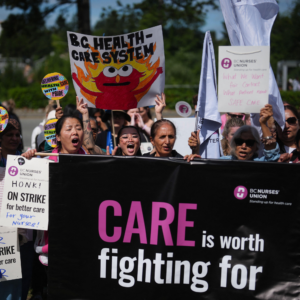
There has been a surge of healthcare professionals moving to Canada from the US. For example, following a campaign to hire US-trained healthcare workers, as of March 2026 more than 400 professionals have accepted job offers in British Columbia.
View this post on Instagram
The reason that American academics are eager to move to Canada is because of the intellectual freedom offered on the other side of the border. For example, a philosophy professor in Texas faced pressure to not teach certain works of Plato (widely considered the father of Western philosophy) because they referred to gender and sexuality.
The response of US academics is akin to the academic response back in the 1960s and ’70s to the women’s liberation movement, where education and careers in gender studies rose in popularity and vitality.
This “brain drain” is the start of Canada welcoming US scientists, scholars and public health workers in response to the cuts made by Trump. The government is investing $1.7bn into recruiting foreign research talent, specifically in medicine, AI and clean technology.

Edited by:

© 2026 The Oxford School for the Future