Harbingers’ Magazine is a weekly online current affairs magazine written and edited by teenagers worldwide.
harbinger | noun
har·bin·ger | \ˈhär-bən-jər\
1. one that initiates a major change: a person or thing that originates or helps open up a new activity, method, or technology; pioneer.
2. something that foreshadows a future event : something that gives an anticipatory sign of what is to come.
We and our partners may store and access personal data such as cookies, device identifiers or other similar technologies on your device and process such data to personalise content and ads, provide social media features and analyse our traffic.
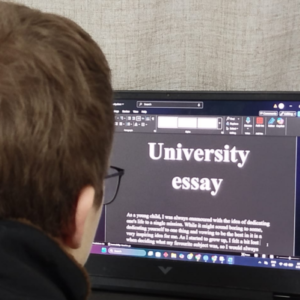
Whenever people around me talk about college applications, I can usually tell how they are feeling before they say a word.
The worry shows on their faces. I feel that too. The application process has a way of making stress unavoidable, and anxiety is part of the deal.
At some point during my own applications, I found myself returning to a word I’ve known my entire life: inshallah. In Arabic, it means “if God wills”. I didn’t realise it at first, but the word simply became my way of surviving the pressure.
College applications tend to make a lot of people nervous. No matter what you do, it never seems enough – not your grades, not your extracurriculars, not your budget, and sometimes not even your background or where you come from. Whenever I filled in an application, I always had a few missing ‘boxes’ that I felt I needed to tick.
As kids, we were always taught that we have to do our best in school in order to get into the best universities. What no one prepared us for is how exhausting and overwhelming the process is: filling out endless forms for universities in different cities, states and countries as well as answering countless questions that analyse every detail of your life, in order to find a university that suits you well as an international student.
After graduating from Year 11, I started looking for universities to apply to, and quickly realised how difficult it was to find one that felt ‘just right’. I wanted a good education, reasonable fees, scholarships, internships and a campus in a location where I’d thrive.
I couldn’t find a place that checked all these boxes, and the stress kept me awake at night. That’s when I started reminding myself: inshallah.
This word – which appears in the Quran and is widely used by both Muslim and Christian Arabs – is not an excuse to stop trying. It’s the opposite. It means you do whatever is in your power first, and then accept that the outcome is not fully under your control.
Harbingers’ Weekly Brief
Subscribe to the Harbingers’ Weekly Brief, a newsletter written by the editorial board of Harbingers’ Magazine, the world’s youngest newsroom, delivered to your inbox every Monday morning.
See you on Monday!
Ooops - please try again.
I was raised believing that God is the best of providers, and that sometimes not getting what you want is a form of protection. Maybe at my so-called dream university I wouldn’t feel at home. Maybe it would hold struggles I can’t see yet.
Growing up as Muslim and Arab, inshallah has always been part of my daily life – said and repeated all the time, whether to reaffirm my plans, hope for the best for my friends and family, or when I am talking about my future. However, it is only now that I understand how grounding it can be. It reminds me how effort matters, but so does trust.
As long as I try my hardest, I believe destiny holds something meaningful for me even if it looks different from what I imagined.
In a world obsessed with rankings, numbers and statistics, inshallah offers comfort and peace with uncertainty. It allows me to think about the future without fear. And during the college application process, that mindset makes all the difference.
Born in 2008 in Alexandria, Egypt, Mutaz studies at the Gulf International School in Saudi Arabia. He is interested in history, culture, journalism and economics. He wrote for the magazine at his previous school, including articles about places of historical importance as well as political essays.
In his free time, Mutaz edits articles on Wikipedia and plays Team Fortress 2. He also loves reading books, especially science fiction and horror.
Mutaz speaks English, Arabic and German, and a bit of French.
🌍 Join the World's Youngest Newsroom—Create a Free Account
Sign up to save your favourite articles, get personalised recommendations, and stay informed about stories that Gen Z worldwide actually care about. Plus, subscribe to our newsletter for the latest stories delivered straight to your inbox. 📲
We use cookies to ensure that we give you the best experience on our website. If you continue to use this site we will assume that you are happy with it.