



16-year-old Maria Fiala examines why the term matters and why it remains contested
The word genocide is often used in discussions about modern conflicts, including Ukraine, Gaza and South Sudan. Politicians, journalists and legal experts often debate whether atrocities committed during these conflicts constitute genocide.
However, genocide is not simply another word for mass killing. It has a specific definition under international law and proving that a genocide has occurred requires meeting strict legal criteria.
Understanding this definition is important because it affects how governments respond to atrocities, how perpetrators may be prosecuted and how future crimes can be prevented.
Harbingers’ Weekly Brief
Subscribe to the Harbingers’ Weekly Brief, a newsletter written by the editorial board of Harbingers’ Magazine, the world’s youngest newsroom, delivered to your inbox every Monday morning.
![slide image]()
![author_bio]()


When was the term coined?
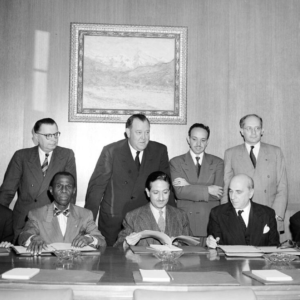
The term genocide was coined in 1944 by Polish-Jewish lawyer Raphael Lemkin. After studying cases in which groups had been deliberately targeted for destruction, he believed there was no existing word that adequately described this crime.
The Armenian genocide was also a significant influence on Lemkin’s thinking, leading him to question whether state sovereignty gave governments the right to treat their own citizens inhumanely.
He combined the Greek word genos (“race” or “tribe”) with the Latin root -cide, meaning ”killing”, to create the new term.
His work helped lead to the adoption of the United Nations Convention on the Prevention and Punishment of the Crime of Genocide in 1948. The treaty defined genocide as a crime under international law and established the definition that remains the basis of international genocide law today.
What counts as genocide?
According to the United Nations convention, genocide means any of the following acts committed with intent to destroy, in whole or in part, a national, ethnical, racial or religious group.
The Convention recognises five acts that may constitute genocide:
- Killing members of the group.
- Causing serious bodily or mental harm to members of the group.
- Deliberately inflicting on the group conditions of life calculated to bring about its physical destruction in whole or in part.
- Imposing measures intended to prevent births within the group.
- Forcibly transferring children of the group to another group.
When does an atrocity become genocide?
The key requirement distinguishing genocide from several other international crimes is intent. Large numbers of deaths alone do not automatically make an atrocity genocide.
Prosecutors need to show that those responsible intended to destroy a protected group, in whole or in part. This makes genocide one of the most difficult international crimes to prove.
Who decides whether genocide has occured?
Many different bodies can investigate allegations of genocide, including UN investigators, national authorities and international prosecutors.
Historians, journalists and human rights organisations may also document evidence or assess whether atrocities could constitute genocide. However, their conclusions do not necessarily amount to a legally binding judgement that genocide has occured.
A legal determination can be made by an international or national court after examining evidence.
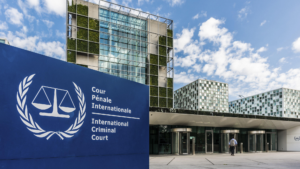
The International Criminal Court (ICC) prosecutes individuals accused of genocide while the International Court of Justice (ICJ) decides disputes between states over their obligations under the Genocide Convention. Both are located in the Hague, in the Netherlands.
These are different forms of legal responsibility: the ICC considers whether individuals are criminally responsible, while the ICJ considers the responsibility of states.
This is one reason that governments, experts and international bodies sometimes disagree whether atrocities in an ongoing conflict constitute genocide. A court may need years of investigation and proceedings before reaching a final judgement.
View this post on Instagram
How is genocide different from other crimes?
Genocide is often confused with crimes against humanity, war crimes and ethnic cleansing but these terms have different legal meanings.
Crimes against humanity include certain acts, such as murder, torture, imprisonment or forced displacement, when committed as part of a widespread or systematic attack against civilian population. Unlike genocide, they don’t require the intention to destroy a certain group.
War crimes are serious violations of the laws of armed conflict, such as deliberately attacking civilians or mistreating prisoners of war. These crimes can occur during armed conflict without any intention to destroy a specific group.
Ethnic cleansing generally refers to forcing a population to leave an area through violence or intimidation.
Although ethnic cleansing is not itself a distinct offence under international law, the actions involved may amount to war crimes, crimes against humanity or even genocide if the required genocidal intention can be established.
These distinctions are important because each crime has different legal requirements, even though the same acts may sometimes fall into more than one category.
Why is the definition important today?

The legal definition of genocide is important because it creates obligations for states to prevent and punish genocide, rather than responding after it has occurred. It also provides a clear standard for courts when deciding whether the crime has occurred.
Today, accusations of genocide frequently appear in discussions about ongoing conflicts. Because the term carries significant legal and political consequences, international courts require specific evidence before reaching a judgment.
Researchers and international organisations also monitor warning signs,such as dehumanising propaganda and systematic attacks against protected groups before violence escalates further.
Should the world revise the definition?
Some scholars argue the definition should be expanded because it protects only four categories of groups: national, ethnical, racial and religious groups.
Political or social groups are not protected categories under the convention, even though members of such groups can also be targeted for systematic violence or destruction.
Others argue that proving genocidal intent is so difficult that legal recognition may come only after overwhelming suffering has already occurred.
However, other legal experts believe the current definition should remain unchanged because it provides a clear and consistent legal standard. Broadening the definition too much, they argue, could make it harder for courts to distinguish genocide from other serious international crimes.

© 2026 The Oxford School for the Future