Harbingers’ Magazine is a weekly online current affairs magazine written and edited by teenagers worldwide.
harbinger | noun
har·bin·ger | \ˈhär-bən-jər\
1. one that initiates a major change: a person or thing that originates or helps open up a new activity, method, or technology; pioneer.
2. something that foreshadows a future event : something that gives an anticipatory sign of what is to come.
We and our partners may store and access personal data such as cookies, device identifiers or other similar technologies on your device and process such data to personalise content and ads, provide social media features and analyse our traffic.
Beijing is a city of contradiction and continuity.
Beneath its glassy skyline are countless years of cultural sedimentation. When I visited my home city after a gap of eight years, my eyes were caught by what had remained of the past.
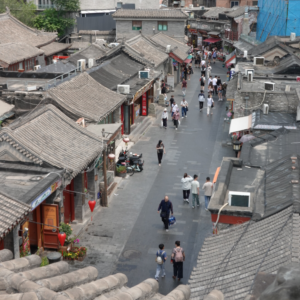
Wandering through its centuries-old hutongs (narrow alleyways), I found familiar sloped grey-tiled roofs and weathered carved wooden lattice windows. These lanes, often no wider than a car, twist between walls worn smooth by generations of residents.
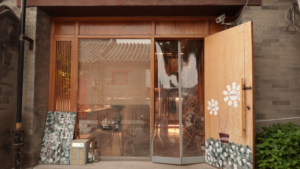
But now, behind those traditional facades, are minimalist cafés, contemporary cocktail bars and ecstatic collections of vibrant shops that redefined old courtyards. Where faded grey brick once framed simple family homes, now floor-to-ceiling glass and sleek steel fixtures open on to light-filled interiors.
The contrast was striking. The hutongs I remembered as aging residential neighbourhoods had now become spaces where history and modern life coexisted.
Hutongs are among Beijing’s oldest urban neighbourhoods, defined by their narrow lanes and siheyuan courtyards that trace back to the Yuan Dynasty (1271–1368). A traditional siheyuan consists of four, single-storey buildings enclosing an open courtyard.
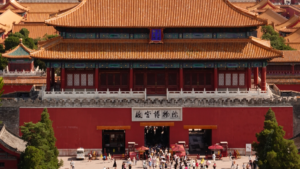
Beijing’s remaining hutongs are concentrated almost entirely within the Second Ring Road, an area referred to as “Old Beijing”. They surround the towering red walls of the Forbidden City, the former imperial palace complex.
As Beijing expanded with more high-rise buildings after the 1980s, many hutongs fell into disrepair. Some were overcrowded or lacked indoor plumbing and heating, and faced demolition. Policymakers and architects were left with a difficult choice: demolish them in the name of progress or preserve them as untouchable historical relics. Increasingly, a third approach has emerged.
Harbingers’ Weekly Brief
Subscribe to the Harbingers’ Weekly Brief, a newsletter written by the editorial board of Harbingers’ Magazine, the world’s youngest newsroom, delivered to your inbox every Monday morning.
See you on Monday!
Ooops - please try again.
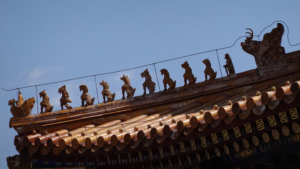
Rather than freezing these buildings in time, architects are retaining defining elements such as tiled roofs and wooden entrance doors while transforming other sections to meet contemporary needs.
Interestingly, this architectural dialogue was set almost a century ago in 1936. This is when the municipal government introduced the Temporary Building Regulations, which restricted the maximum height of buildings in the historic part of Beijing to 30-45m, to protect heritage buildings such as hutongs. This established the principle that new construction should always respect the character of old Beijing
Old Beijing, new lives
Stepping into one of the contemporary cafés, Joy Beans Coffee, I realised that these renovations were more than aesthetic. The courtyard still invited people to linger, just as the traditional ones had intended for centuries. Friends and family gathered over coffee and neighbours drifted in and out through the same wooden gate.
The function of the space had evolved, yet its ability to bring people together endured.
In a city increasingly defined by glass office towers and apartment blocks, these restored courtyards offered a slower pace, a touch of authenticity and a moment for conversation.
We noticed distinctive old wooden pillars accompanied by newly refurbished walls. I realised that the architect had purposefully preserved the timber structure that uses sunmao joinery.
This ancient woodworking technique locks wooden components together without nails or glue. Every element is fitted with another via mortise and tenon joints, creating structures that have endured for centuries while remaining repairable one piece at a time.
In school, I was taught that sunmao is one of the highest achievements in Chinese craftsmanship. I believe it also reflects a distinctly Chinese philosophy – that buildings are living structures that can adapt, age and be renewed without abandoning their identity. These renovation projects aim to do the same now.
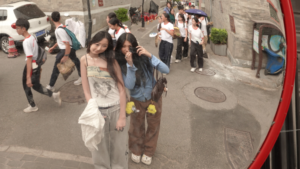
Jennie (right) and friend taking a selfie in a fisheye mirror.
In the fisheye mirror that stood at the nearest intersection, I snapped a selfie with my friend. I realised that I had spent the entire afternoon witnessing a city negotiating with its own history. Beijing’s restored courtyards taught me that preservation is not resisting change, it is carrying the past forward with intention.
I live in Canada, so relatives back home always tell me to “not forget my roots” or “remember who you are”. In these narrow alleyways, centuries’ old roofs continue to shelter new ideas, proving that even a city can embrace the future without forgetting where it began. A person’s identity is no less complicated than a city’s, and I walk forward knowing that the future and the past coexist simultaneously.
Born in Beijing in 2008 and later finding a second home in Toronto, Jennie grew up navigating and celebrating the space between two cultures. Her curiosity draws her toward technology and ethics: fields she sees as different lenses for understanding how people and societies interact. She discovered journalism after her English teacher slipped her a stack of recommended books, and since then she has treated storytelling and social advocacy as more than interests.
Beyond academics, Jennie finds joy in golf, photography, and travel, where she can slow down and observe the world with intention. She plays violin in her spare moments and loves following major sporting events, whether for the thrill or the strategy. She is fluent in English, Mandarin, and French, and continues to build a life shaped by a blend of cultures, disciplines, and passions.
🌍 Join the World's Youngest Newsroom—Create a Free Account
Sign up to save your favourite articles, get personalised recommendations, and stay informed about stories that Gen Z worldwide actually care about. Plus, subscribe to our newsletter for the latest stories delivered straight to your inbox. 📲
We use cookies to ensure that we give you the best experience on our website. If you continue to use this site we will assume that you are happy with it.