
Harbingers’ Editorial Board examine why dealing with the climate crisis must happen now
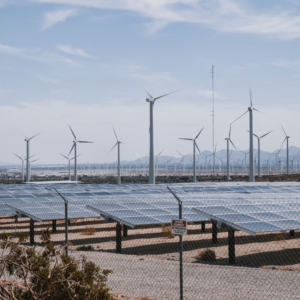
The transition to clean energy is intensifying competition for critical minerals used in green technologies.
Picture by: Kindel Media | Alamy
Article link copied.
6 July 2026
Environmentalism is not an afterthought – the cost is already here
&
, Arnav Maheshwari&
, Klara Hammudeh&
, Irma Mecele&
, Charlotte Wejchert&
, Lukas Abromavicius&
, Sofia Vorobei&
, Jamie Chan&
, Nell Dethloff&
, Jennifer Yung-Coak&
, Hesandi Ravisinghe&
, Stephanie Kwok&
Kaja MajewskaNearly two in three children worldwide, around 1.5 billion, are exposed to heatwaves that are becoming more frequent, longer-lasting or more severe. The heatwave in Europe these past weeks is only the latest reminder of what that looks like in real time.
More than 150 million people were affected as temperatures rose above 35°C across parts of the continent, even exceeding 40°C in some areas. More than 2,000 excess deaths were recorded in France alone.
But Europe is not an exception. It is one example of a wider pattern of climate extremes now affecting communities across the world. Heat is only one part of the larger crisis: nearly half of the world’s children, around 1.1 billion, now face at least three overlapping climate hazards at once.
Harbingers’ Weekly Brief
The crisis is no longer waiting in the future; it is already shaping the present.
As Harbingers’ Magazine’s Editorial Board, we found environmentalism almost too broad to contain in one editorial. But that is exactly the point: it no longer fits neatly into one category.
It encompasses rising temperatures and greenhouse gas emissions, but it also shapes floods in South Asia, climate displacement, green investment, celebrity activism, and even the future of global sport.
The human cost is already here
The past 11 years have been among the warmest ever recorded. Even when La Niña brings cooler temperatures, the temporary drop does not change the wider pattern of rising heat. Greenhouse gases such as carbon dioxide and methane continue to trap infrared radiation that is radiated back out by Earth’s surface.
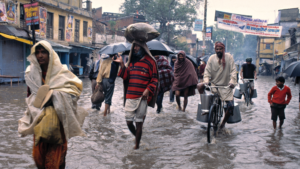
The clearest evidence is in the places where climate pressure meets weak infrastructure. Across South and Southeast Asia, environmental disasters have already affected tens of millions of people. Between 2019 and 2023, more than 82 million people in countries including India, Pakistan, and Indonesia were affected by environmental disasters.
The 2022 floods in Pakistan submerged roughly one-third of the country, affecting 33 million people and damaging or destroying more than 2 million homes. In 2024, flash floods in Bangladesh affected around 18 million, leaving around 1.2 million families trapped by rising waters across the country’s east and southeast.
These disasters expose inequality as much as they expose infrastructure. Low-income communities are often pushed into flood-prone areas because safer land is too expensive, then left with weaker housing and fewer resources to recover.
Women and children face additional risks:women may have restricted mobility, heavier caregiving responsibilities and less access to relief, while children can lose weeks or months of schooling when homes, roads and classrooms are damaged.
In 2024, climate disasters displacednearly 46 million people globally, the highest figure recorded since monitoring began. Yet the legal system has not caught up to this reality – those forced from their homes by floods, drought, storms or rising seas often lack clear legal protection.
“Climate refugees”are not formally recognised under the 1951 Refugee Convention,which defines refugees as people fleeing persecution based on factors such as race, religion, nationality or political opinion. If losing your home to floods, droughts or rising seas does not guarantee protection, what does that say about the limits of our current human rights system?
A 2025 International Court of Justice advisory opinion has pushed courts and governments to treat climate change as a human-rights issue. But the world is still producing climate victims faster than it is producing protections.
The price of going green
The world is beginning to respond, but even the solutions carry their own costs. The World Bank estimates that production of minerals such as graphite, lithium and cobalt could rise by nearly 500% by 2050 to meet growing demand.
As industries seek to capitalise on the clean-energy transition, technologies such as electric vehicles, solar panels, wind turbines and batteries have made these minerals central to a global race for processing power and market dominance.
China remains the dominant player in mineral refining. Recent projections show that by 2035, China will supply 60% of the refined lithium and cobalt, and around 80% of battery-grade graphite and rare earth elements.
But the United States and the European Union are trying to catch up, by investing heavily in domestic supply chains and clean-energy manufacturing to reduce their dependence on foreign supply chains.
At the same time, the transition could create real economic opportunity. A greener economy can mean new jobs, cleaner industries and more efficient systems of production, especially in sectors such as transport, agriculture, technology and manufacturing.
Projections suggest that more than 85 million jobs could be created globally within the sustainability sector by 2030. Some major companies are already moving in that direction: Microsoft has invested in climate innovation and carbon-removal technology, Apple has pushed suppliers towards renewable energy, and Amazon has expanded electric delivery and renewable-power projects.
Unfortunately for us, opportunity does not erase cost. To fuel these ambitions, the International Energy Agency (IEA) estimates that around $800bn in mining investment is needed by 2040 to keep the world on track for a 1.5°C pathway – the target for limiting the most severe effects of climate change.
Renewable energy carries enormous promise: it could give countries greater control over their own production by reducing dependence on imported fossil fuels.
But for now, that future remains a wait-and-watch game, shaped largely by whether major economies such as the United States and China choose to lead responsibly or simply compete for dominance.
The climate crisis and public life
The climate crisis has moved into public life, shaping what people watch, how they travel, which companies they trust and which public figures they listen to.
Celebrities such as Billie Eilish have brought climate change, animal welfare and sustainable fashion into mainstream conversation, while Leonardo DiCaprio has gone further by using his own foundation to fund climate research and conservation projects around the world.
Sports show the same tension but on a larger stage. With the 2026 FIFA World Cup ongoing, the environmental cost of modern sport is harder to ignore: construction, energy use, waste and fan travel all leave a sizeable footprint.
Estimates indicate that the 2022 FIFA World Cup in Qatar produced around six million tonnes of carbon dioxide (the annual use of about 700,000 average homes).
Harbingers’ Editorial Board sees environmentalism as “part of a huge system of interconnected factors that push and pull on each other at different strengths. That means progress will not always be visible or linear, and there is no singular solution that can be applied once and left alone.
The 1987 Montreal Protocol showed what coordinated action can achieve: after scientists linked CFCs to the hole in the ozone layer, 197 parties worked together to eliminate most of these chemicals.
Individual choices matter, but they cannot carry the weight of the climate crisis alone. We can make a difference as citizens, workers, cultural actors, investors and, most importantly, as the generation that will inherit tomorrow – but only if we engage with government policy and create pressure on those capable of making major emission cuts possible.
Written by:

Editor-in-Chief 2026
Budapest, Hungary
Lola Kadas joined Harbingers’ Magazine in the summer of 2024 as a contributor during the Oxford pop-up newsroom. After completing the newsroom and writing course, she became a staff writer later that autumn, covering society and public affairs.
Her strong writing and dedication to the magazine led to her appointment as Society Section Editor in 2025. During this time, she also reported from Bali, Indonesia, where she worked on a special project exploring the local mental health landscape and produced a series of thought-provoking articles.
Following a successful year in that role, and in recognition of her steady development and commitment, Lola stepped into the role of Editor-in-Chief in 2026, sharing the position with Arnav Maheshwari.
This will mark the first time the magazine is led by joint Editors-in-Chief, reflecting the growing scope and ambition of the publication. In her new role, Lola will also introduce a fact-checking system to further strengthen the magazine’s editorial standards.
Born in 2009, Lola has lived in both Budapest, Hungary, and California, United States. She is interested in music, pop culture, politics and mental health. She speaks English, Hungarian, French and Spanish.
In her free time, she enjoys going to concerts and creating studio art, and is a fan of Taylor Swift’s music.

Editor-in-Chief 2026
Georgia, United States
Arnav Maheshwari joined Harbingers’ Magazine in October 2024 after winning The Harbinger Prize 2024 in the Economics category, earning a place on the Essential Journalism Course. Writing on the global economy, entrepreneurship and macroeconomics, he quickly established himself as a thoughtful and dedicated contributor.
His work led to his appointment as Economics Section Editor in March 2025. After a successful year in the role, and in recognition of his steady development and engagement with the magazine, Arnav became Editor-in-Chief in 2026, sharing the position with Lola Kadas.
Together they will form the magazine’s first joint Editors-in-Chief, reflecting the expanding scope and ambitions of Harbingers’. Alongside his editorial leadership, Arnav will also develop Harbingers’ Lite, a self-teaching platform designed to support aspiring young journalists.
Born in 2009 and based in Atlanta, Georgia, Arnav is deeply interested in economics, global development and financial systems, and plans to study economics at university. He speaks English and Hindi and is currently learning Spanish.
Outside the magazine, he works on projects related to economic education, research and innovation, with a strong interest in start-up leadership and building initiatives with real-world impact. He has also gained international recognition by captaining his team to second place at the Economics World Cup, one of the world’s most competitive economics competitions.

Politics Section Editor 2026
Film & Book Club Editor and Global Newsrooms Manager
Warsaw, Poland
Klara Hammudeh, born in 2008 in Warsaw, Poland, joined Harbingers’ Magazine in March 2024, writing on international affairs, crime and music.
Since joining the magazine, she has published numerous articles on politics and culture. In 2024, she reported on the US presidential elections on the ground, and in February 2025 covered the Middle East crisis from Amman, Jordan. Her strong writing and editorial work led to her appointment as Politics Section Editor in March 2025, while also serving as Poland’s 2025 Presidential Election Newsroom Editor. During her time in this role, she also reported on the ground on Zohran Mamdani’s appointment as Mayor of New York.
In 2026, Klara continues as Politics Section Editor and also takes on the roles of Film & Book Club Editor and Global Newsrooms Manager, helping coordinate Harbingers’ international reporting initiatives.
Klara attends high school in Warsaw, Poland. She plans to study psychology, international politics or criminology, preferably in the United States.
In her free time, she enjoys reading, dancing, listening to music and exploring pop culture — particularly how Broadway and the West End adapt classic Disney stories into musicals.

International Affairs Section Editor 2026
Vilnius, Lithuania
Irma Mecele, born in 2009 in London, joined Harbingers’ Magazine in August 2025 as part of the Japan Newsroom programme. Since then, she has written regularly for the magazine, covering politics, international affairs and society. Her work quickly established her as a thoughtful reporter and earned her the role of International Affairs Correspondent in January 2026.
In February the same year, Irma reported on the ground from the Munich Security Conference, becoming one of the world’s youngest journalists to cover the event in person. She produced a series of multimedia pieces combining interviews, research and her own reporting from the conference.
Her consistent work and engagement with the magazine led to her appointment as International Affairs Section Editor for 2026, a role she took up on 1 March.
Irma is interested in history, politics and the environment, and plans to study economics. She has completed a Columbia University programme, undertaken an internship at the European Union, and participated in The Voice Kids of Spain.
In her free time, Irma plays tennis and piano, practises karate and boxing, and enjoys learning languages, travelling and singing. She speaks Russian, English and Spanish, and studies French and Lithuanian.

Society Section Editor 2026
Warsaw, Poland
Charlotte Wejchert, born in 2008, joined Harbingers’ Magazine in August 2024 as a contributor.
She took part in a reporting trip to Yerevan, Armenia, covering the refugee crisis following the Nagorno-Karabakh war and collaborating with students from the Harbingers’ Armenian Newsroom. The trip resulted in several thought-provoking articles and marked the beginning of her regular work with the magazine.
In the autumn of 2024, after completing the writing course, Charlotte became a staff writer focusing on social affairs, human rights, politics and culture. Her strong writing and dedication led to her appointment as Human Rights Section Editor in March 2025.
After a successful year in that role, and driven by her growing interest in the impact of AI on society, including its ethical implications and its influence on education, politics and public life, Charlotte stepped into the role of Society Section Editor for 2026.
In addition to her editorial responsibilities, she will lead an open-call project exploring the ethical consequences of AI and will serve as Armenian Newsroom Editor.
Charlotte attends high school in Warsaw, Poland, where she studies humanities and plans to continue in this field in her higher education.
She also works with the Sourcery podcast, which focuses on open conversations with leading changemakers in finance and technology. Charlotte speaks Polish, English, French and Italian.

Economics Section Editor 2026
Sevenoaks, United Kingdom
Lukas Abromavicius, born in 2009, joined Harbingers’ Magazine in August 2025 as part of the Japan Newsroomprogramme. Since then, he has written regularly for the magazine, establishing himself as a thoughtful writer on economics and politics.
His consistent work and engagement with the magazine led to his appointment as Economics Section Editor for 2026, a role he took up on 1 March.
Alongside his editorial responsibilities, Lukas will also lead a project exploring the long-term economic and social consequences of the war in Ukraine, a topic closely connected to his own background.
Of Ukrainian and Lithuanian heritage, Lukas studies in Sevenoaks, United Kingdom, where he has developed a strong interest in economics and plans to pursue finance at university.
Beyond journalism and his studies, he serves as vice-chair of the Sevenoaks Youth Council and is an active volleyball player. He speaks Ukrainian, Russian, Lithuanian, French, English and Spanish.

Culture Section Editor 2026
Vergel, Spain
I’m Sofia Vorobei, with a passion for quality cinema. It all started when I was around eight. While watching one of those Nickelodeon sitcoms, I couldn’t stop thinking about how fun it must be for the actors and how I wished I could be part of something like that. Ever since then, I’ve wanted my life to have something to do with it. I’ve wanted to act, create, write, direct…
In middle school, however, my perception of that changed. I wasn’t eight anymore, and I understood that this path is an uphill battle. It’s demanding, messy, and a bit like a lottery: you either get very lucky and win, or you don’t.
Still, that realisation didn’t push me away from my dream; it was simply a reality check. I began to understand that passion alone isn’t enough — it takes hard work and making the most of every resource available, while continuing to improve without rushing the process. The industry may be unpredictable, but I believe that if you truly put everything into something, it has a way of standing out.
I was born in 2009 in Kyiv, Ukraine, and moved to Vergel, Spain, near Valencia, in 2020.
I joined Harbingers’ Magazine in the summer of 2023 and have since written about the intersections of culture, creativity and society. My work with the magazine led to my appointment as Culture Section Editor in March 2025.
I also serve as Afghanistan Newsroom Editor, roles I continue to hold in 2026, helping shape the magazine’s cultural coverage and coordinate reporting within the newsroom.
I speak Ukrainian, Spanish, English and Russian.

Human Rights Section Editor 2026
Hong Kong
Jamie Chan, born in 2009 in Hong Kong, joined Harbingers’ Magazine in August 2025 as part of the Japan Newsroom programme. Since then, she has written regularly for the magazine, covering human rights, society and legal issues that shape everyday life, quickly establishing herself as a thoughtful voice on justice and social affairs.
Her consistent work and engagement with the magazine led to her appointment as Human Rights Section Editor for 2026, a role she took up on 1 March.
Jamie studies in Cheltenham, United Kingdom. She is interested in true crime and psychology and plans to study law at university.
In her free time, Jamie enjoys philosophy, reading about unsolved crimes and making jewellery. She also plays volleyball as part of her school team and runs a collaborative writing club at her school.
Jamie speaks English, Cantonese and Mandarin.

History Section Editor 2026
Warsaw, Poland
Nell Dethloff, born in January 2009 in Warsaw, Poland, studies between Poland and Bali and writes opinion pieces for Harbingers’ Magazine.
She joined the magazine during the 2024 US Presidential Election, covering the race from the perspective of the youngest voters and bringing fresh insights into youth political engagement.
In 2026, Nell becomes History Section Editor, leading a newly launched section that will explore how historical events, ideas and turning points continue to shape politics, culture and society today.
She is particularly interested in biology, history, criminology and culture.
Nell speaks English and Polish.

Sport Section Editor 2026
New Hampshire, US
Jennifer Yung-Coak, born in 2009 in Hong Kong, studies in New Hampshire, United States. She joined Harbingers’ Magazine in August 2025 as part of the Japan Newsroom programme, where she began contributing articles to the magazine.
Since then, she has written on topics including architecture, international relations and human rights, while also bringing her enthusiasm for athletics to the newsroom. Her consistent work and dedication to the magazine led to her appointment as Sport Section Editor for 2026.
Jennifer is interested in design, business and economics, and plans to continue her studies at an American university.
In her free time, she enjoys travelling, drawing and playing sports, and also takes part in volunteer programmes working with children.
Jennifer speaks English, Cantonese and Chinese.

Science Section Editor 2026
Galle, Sri Lanka
Hesandi Ravisinghe, born in 2009 in Galle, Sri Lanka, joined Harbingers’ Magazine as a contributor to the Sri Lankan Newsroom in January 2024. After completing the writing course, she became a regular writer, focusing on wildlife and science.
Her strong interest in nature and consistent work with the magazine led to her appointment as Science Section Editor in March 2025, a role she continues to hold in 2026. She also serves as Editor of the Nepali Newsroom.
Hesandi has a deep interest in art, nature and wildlife, particularly elephants, leopards and birds.
In her free time, she enjoys painting and travelling.
Hesandi speaks English and Sinhala and is currently learning Indonesian.

South Asia Editor 2026
Hong Kong, China
Stephanie Kwok, born in 2009 in Hong Kong, joined Harbingers’ Magazine in November 2025 as the overall winner of the Harbingers Prize 2025. After completing the writing course, she became a regular writer for the magazine.
Her strong writing and editorial engagement led to her appointment as South Asia Editor for 2026, a role she took up on 1 March. In this position, she helps coordinate reporting and contributions from the region.
Stephanie lives and studies in Hong Kong and is an aspiring journalist and writer. She is particularly interested in investigative journalism, English literature and classics.
She is also a contributing writer for several publications, including Polyphony Lit and FilmPsych, and enjoys writing poetry in her free time.
Stephanie speaks English, Cantonese, Mandarin and Shanghainese, and is currently learning Latin.

Film & Book Club Editor
Warsaw, Poland
Kaja Majewska born in 2009 in Warsaw, Poland, joined Harbingers’ Magazine to write about and share the beauty of film, photography and literature.
Her thoughtful reflections on cinema and culture, along with her creative eye and strong engagement with the magazine’s cultural coverage, earned her the role of Film & Book Club Editor for 2026. In this position, she helps lead conversations around film, books and visual storytelling within the Harbingers’ community.
She plans to study international relations, psychology in business, or film production, aspiring to pursue a career where she can be proud of the work she creates and the stories she helps bring to life.
In her spare time, Kaja enjoys discovering and reviewing films, reading philosophical books, designing art, cooking and baking. She also enjoys staying active through sport, particularly volleyball and snowboarding.
🌍 Join the World's Youngest Newsroom—Create a Free Account
Sign up to save your favourite articles, get personalised recommendations, and stay informed about stories that Gen Z worldwide actually care about. Plus, subscribe to our newsletter for the latest stories delivered straight to your inbox. 📲
© 2026 The Oxford School for the Future