

17-year-old Anika reports on potentially dodgy deals worth millions tied to the US–Iran war
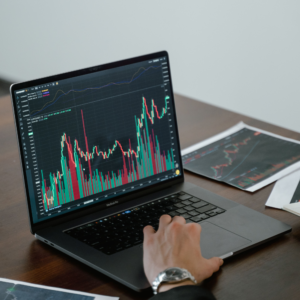
US regulators are investigating a series of unusually timed oil trades worth hundreds of millions of dollars, executed just minutes before major government announcements regarding the war with Iran.
These trades, placed on financial markets operated by the CME Group and Intercontinental Exchange, raised alarms with the Commodity Futures Trading Commission. The CFTC is an independent agency that focuses on ensuring market integrity and economic competitiveness and protects investors from fraud and manipulation in the US.
Harbingers’ Weekly Brief
Subscribe to the Harbingers’ Weekly Brief, a newsletter written by the editorial board of Harbingers’ Magazine, the world’s youngest newsroom, delivered to your inbox every Monday morning.
![slide image]()
![author_bio]()
![author_bio]()


The central concern is that classified government information, intended for national security and diplomatic purposes, was weaponised for unethical financial gain.
The CFTC is specifically examining a massive $950m oil investment that was placed on 7 April shortly before a critical US-Iran ceasefire announcement, leading to billions of dollars of profit to those who invested.
The timing has drawn intense interest from both lawmakers and market analysts. The consensus among experts is that the trade’s accuracy is statistically impossible to explain through standard market behaviour or public data analysis.
View this post on Instagram
Unethical financial gain
Harbingers’ interviewed high-school economics teacher Rebecca Casey, who explained that insider trading occurs when “someone uses material, non-public information to make investment decisions, giving them an unfair advantage”.
Under American law, specifically the Securities Exchange Act of 1934 and the Commodity Exchange Act, insider trading is outlawed. Markets are designed to be a level playing field. When an insider (someone with access to private government or corporate secrets) uses a ‘tip’ to trade, they are essentially stealing from the public. This practice is harmful because it erodes market integrity.
If global investors believe the game is rigged by those with political connections, they withdraw their capital, leading to economic instability that transcends US borders.
In mid-April, Democrat representative Ritchie Torres called for a formal federal investigation into the $950m trade, stating that these manoeuvres represent “potential insider trading on sensitive diplomatic information”.
The sentiment is echoed by those on the front lines of market analysis. Paul Sankey, a leading energy analyst at Sankey Research, described the activity bluntly: “It’s simple corruption. It’s not a free market.”
This is not an isolated incident. On 23 March, approximately $580m in oil futures trades were executed within a one-minute window just before President Trump delivered a televised announcement signalling a de-escalation with Tehran. Immediately following the announcement, oil prices plummeted by more than 10%.
Those who had bet that the oil stocks would decline, through a process called “short positioning”, walked away with millions of dollars of easy profit. Betting that these stocks would fall was a very risky move, as oil prices had been rising, which makes the whole situation even more suspicious.
A veteran trader emphasised that trades of this magnitude, especially when executed during “low-liquidity hours” – times when fewer people are trading – are highly irregular and almost certainly the work of individuals who knew exactly when the news would break.
This activity has also moved into “prediction markets” such as Polymarket and Kalshi, where users place bets on real-world events. An analysis published by the Wall Street Journal found that certain traders on these platforms correctly predicted sensitive diplomatic shifts at a rate of 70%, suggesting they weren’t just lucky – they had the map.
Identifying the culprits is difficult because oil markets often use shell companies, which exist primarily on paper but have no active operations or employees. For instance, firms such as Milen Trading and Xin Rui Ji Trading have been identified by the US Treasury Department as part of covert networks linked to sanctioned Iranian exports. While these specific firms haven’t been charged in the 2026 trades, they illustrate the ‘dark money’ channels used to move illicit profits.
How does this affect us?
For Americans, political market manipulation indirectly destabilises the funds that house our parents’ or our own future retirement plans, as most retirement savings are tied to the stock market. When insiders manipulate energy prices for a quick win, they create artificial volatility that can drain the value of the index funds everyday people rely on for their old age.
The broader concern is structural. Democratic senator Elizabeth Warren of Massachusetts has been a vocal proponent of closing legal loopholes that allow trading on government-derived information, arguing that national security should never be monetised.
Experts agree that for the system to survive, there must be a total overhaul of how sensitive economic data is released. Without these changes, the market stops being a tool for global growth and becomes a casino where the house (and the insiders) always win.

Edited by:

© 2026 The Oxford School for the Future