



Alicja Melaniuk, 17, and Karolina Orfinger, 16, inquire on what it takes to work in the film industry

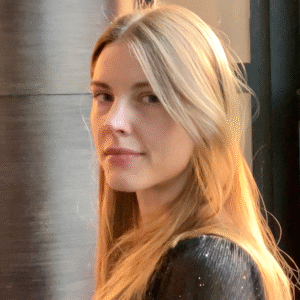
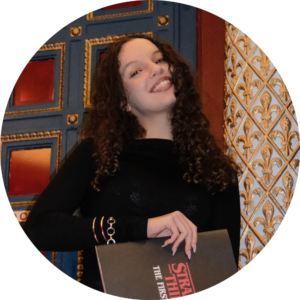
Film producer Zofia Kujawska.
28 November 2025
‘Best advice I got was: don’t study film production’, says film producer Zofia Kujawska
Zofia Kujawska works in an environment where every frame carries a story, every story carries a risk – and risk is something that has to be embraced, not avoided. In conversation with two Harbingers’ journalists, Karolina Orfinger and Alicja Melaniuk, she explains what being a film producer is actually about.
Harbingers’ Weekly Brief
Subscribe to the Harbingers’ Weekly Brief, a newsletter written by the editorial board of Harbingers’ Magazine, the world’s youngest newsroom, delivered to your inbox every Monday morning.
![author_bio]()
![author_bio]()
![author_bio]()

Alicja Melaniuk: What made you decide to become a filmmaker? What were your first steps in the industry?
Zofia Kujawska: I decided to be a film producer pretty early on. I think I was 15 years old when I started to think about this kind of future for myself. I grew up in a home where there were a lot of films. My parents’ friends were film directors, so I was constantly in this environment. When I was in high school, I found out that something like film production exists, and I thought that it was a career, or at least, an academic path that I could take on.
When I decided what to study, I was told by one of the directors I knew from my first days: “just don’t study film production. You will learn everything while working. Study something that broadens your horizons.”
That is what I did. I studied anthropology, and I worked for film festivals during my time at the university. When I started to work with documentary films, I discovered how much my background in anthropology helps me in my work.
The following excerpt from the recorded interview was edited for clarity and consistency.
Alicja: It sounds like the decision to get into the industry was quite a risky one. What would you say was the turning point in your career?
Zofia: There was one moment like this for sure. It was when the director whom I knew for some time and have been working with approached me in 2022, saying that she is visiting a refugee camp. She wanted to make a film about the refugee crisis on the Polish-Belarusian border.
At the time, the crisis had just begun. And as I live in that region of Poland, I could see the change of the landscape and of the surroundings. I felt completely helpless about it, so I really needed something that would make me feel active. When the director approached me with this subject, which was also my first film as a producer, I thought that it was exactly how I can use my skills.
Alicja: What do you think is valuable about documentary films? What makes them different from feature films?
Zofia: The impact that documentaries can have is bringing visibility to a huge number of people suffering. Their stories are silent, their voices are unheard. The fact that we will make the film will not change the world but I think that we are bringing their dignity back.
This is my view on documentaries: we bring unknown people and unknown stories to the screen.
Karolina Orfinger: Which one of the movies you have produced do you think left the biggest impact on the audience?
Zofia: There are some films that I worked on that were super successful in terms of visibility and awards, for example Pianoforte, Silent Trees and The Balcony Movie. I could see during the premieres and other screenings how strong the reactions of the audiences were. People were really emotional, and that is what we aim for as filmmakers.
Karolina: Would you say that every project that you make is a piece of you, a part of who you are?
Zofia: For sure. I mean, I would say that I am unable to make films that are not like that. I just cannot find motivation to do that.
Alicja: And can you find yourself in some movies that you produce?
Zofia: Not directly, because they are not stories based on my life and experiences, but I am connected to each and every one of them, in an indirect sense.
This is actually where I recognize that those films are universal, because if a story from somebody from the other side of the world resonates with me so deeply, it means that it’s not about me and this person, it’s about something bigger.
Alicja: If you were to give advice to young filmmakers, would you say that the one thing they need is passion?
Zofia: Yes, I think passion would be one of those important things because working in the film industry is not easy. For many reasons it requires a driving force that will keep you inside the industry. I think you can love different aspects of the work, but it has to be passion that drives you, otherwise you probably will quit.
Edited by:
© 2026 The Oxford School for the Future