



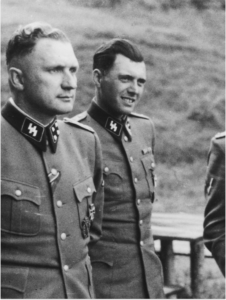
17-year-old Lola Kadas profiles the Nazi doctor responsible for choosing who lived and who died on their arrival at the death camp
Nazi SS physician Josef Mengele was the key decision-maker at the Auschwitz-Birkenau concentration and extermination camp, deciding who would be selected for forced labour and who would be sent to their deaths.
Often mentioned alongside notorious Nazi figures such as Heinrich Himmler, Hermann Göring and Adolf Hitler himself as one of the worst enablers of Holocaust, Mengele’s role at Auschwitz was crucial to the camp’s mass-murder mechanism.
Between 1943 and 1945, Mengele sent as many as 400,000 of the 1.1 million Jews in Auschwitz to their deaths. However, those who were not immediately killed were far from safe: the pseudo-scientific experiments he performed on children and twins after surviving the selection process was a fate almost worse than death.
Harbingers’ Weekly Brief
Subscribe to the Harbingers’ Weekly Brief, a newsletter written by the editorial board of Harbingers’ Magazine, the world’s youngest newsroom, delivered to your inbox every Monday morning.
![author_bio]()
![author_bio]()


Who was Josef Mengele?
Born in 1911 in Bavaria, Germany, Mengele studied medicine and physical anthropology at multiple universities, including the University of Munich. During his time at university, he became interested in “race science”, or the idea that Germans were biologically superior to others – essentially biological racism.
In 1937, he started working at the Institute for Hereditary Biology and Racial Hygiene in Frankfurt. There, he met Dr Otmar von Verschuer, who was the institute’s leading geneticist with a specific focus on twins.
Mengele joined the Nazi party and the SS in 1938. Two years later, he was drafted into the German Army and volunteered for the medical arm of the Waffen-SS (the military branch of the SS). This is where he learned all about the criteria used to determine whether someone was “racially and physically qualified” to be a German.
In May 1943, he was assigned to work at Auschwitz, where he would ultimately remain until the camp was liberated in 1945.
What did Mengele do in Auschwitz?
As a doctor at Auschwitz, Mengele had two main tasks. The first was to select which of the new prisoners would be sent to the gas chambers straight away. Only those who were deemed fit for hard physical labour were kept alive. The second was to use his skills as a doctor within the framework of Nazi ideology.
Mengele’s presence became so synonymous with these selections that it earned him the nickname of the “Angel of Death”.
His biomedical research was even more disturbing: conducting extremely harmful (and usually deadly) medical experiments, with a specific focus on twins. Inspired by his mentor Verschuer who had used twins in his studies of hereditary diseases, Mengele conducted four main types of research: testing methods of mass sterilisation; infecting prisoners’ wounds to observe effects and test treatments; unnecessary surgeries; and murdering then “dissecting prisoners for anthropological and medical research”.
Rooted in Nazi-style racism and xenophobia, Mengele’s research focused on understanding pseudo-scientifc theories of racial hierarchy. He wanted to discover the prevalent markers of so-called “inferior” races in order to help preserve the German “Aryan” race, which Nazis believed to be superior.
How did Mengele enable genocide?
While it is true that Mengele was personally responsible for the deaths of hundreds of thousands of people, it is worth considering that he was also part of a larger system built to destroy and eradicate multiple ethnic and religious groups.
His ideas about genetic superiority and racial science were not unpopular at the time: theories of eugenics were widely adopted in Britain and the US, as well as Germany.
One of the most frightening aspects of Mengele and his role is that his level of education – especially for the time – was very high. Today, it is very hard to imagine how someone who had learned about biology and medicine as a science could be deluded into embracing such ideas.
View this post on Instagram
Did justice ever catch up with him?
In January 1945, the Nazi staff fled Auschwitz, just before the Soviet Army liberated the camp. Mengele remained in Germany working as a farm labourer under a false name until 1949. US war crimes investigators attempted to find and arrrest him, but his family managed to convince them that he had died.
However, the attempt scared him into leaving Germany for good. He emigrated to Argentina under a false name in the summer of 1949, obtaining citizenship there under his real name some years later. When he learned that the West Germans had learned his whereabouts and were looking for him, he emigrated to Paraguay and obtained citizenship there too.
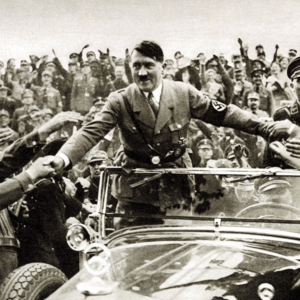
In 1960, on learning that Israeli intelligence agents had captured Adolf Eichmann, he fled Paraguay too. He lived the rest of his life in Brazil, where he diedin 1979, after having a stroke while swimming. His death wasn’t verified until 1985.
He never faced any consequences for the countless deaths and horrific experiments he was responsible for.
Mengele and his actions lead to a larger conversation: should we attribute genocide to individuals or think about it as a result of a wider movement? And if we choose the latter, then does that limit the consequences that enablers should face?
These questions are difficult to answer, but through analysing events like the Holocaust and people like Mengele we are able to better decide how to answer them.
What we can all learn from such a situation is to take a step back and reflect on our own choices and the groups we engage with. Whether that be a political party or a singer’s fandom, we should always be critical of whether such things align with our morals.

Edited by:

© 2026 The Oxford School for the Future