Harbingers’ Magazine is a weekly online current affairs magazine written and edited by teenagers worldwide.
harbinger | noun
har·bin·ger | \ˈhär-bən-jər\
1. one that initiates a major change: a person or thing that originates or helps open up a new activity, method, or technology; pioneer.
2. something that foreshadows a future event : something that gives an anticipatory sign of what is to come.
We and our partners may store and access personal data such as cookies, device identifiers or other similar technologies on your device and process such data to personalise content and ads, provide social media features and analyse our traffic.
What happens if you mix the unique nature of Albuquerque, an actor from Better Call Saul, and a sci-fi concept with the theme of individuality?
The answer is the TV show Pluribus, which premiered last November and was an instant hit.
Out of its many achievements, these ones stand out: it is Apple TV’s most-watched show ever, it has a score of 98% on Rotten Tomatoes and it was renewed for season 2 right away. As someone who rarely watches films or TV shows, and who greatly enjoyed Pluribus, I can say it definitely deserved the acclaim.
The show’s creator is Vince Gilligan, who’s also responsible for making cult classics such as Breaking Bad (2008–13) and its prequel, Better Call Saul (2015–22). So it’s no surprise that Pluribus was also a success. Not only that, but the three shows also share the same setting – Albuquerque, New Mexico, in the United States.
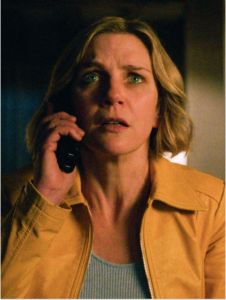
The main character, Carol Sturka, is played by Rhea Seehorn, who played Saul’s wife Kim Wexler in Better Call Saul. It’s a standout performance, for which she won her first Golden Globe.
The story follows Carol, a lesbian and best-selling novelist, who turns out to be immune, along with just 12 other people across the whole world, to an alien virus that turns everybody into a hive mind.
Those affected by the virus, despite being very docile and unable to hurt a fly (seriously, they can’t even pluck an apple from a tree), have one biological imperative: to spread the virus. Sturka, a freedom-loving woman who wants to keep her individuality, is strictly against the idea.
Harbingers’ Weekly Brief
Subscribe to the Harbingers’ Weekly Brief, a newsletter written by the editorial board of Harbingers’ Magazine, the world’s youngest newsroom, delivered to your inbox every Monday morning.
See you on Monday!
Ooops - please try again.
Over the nine episodes, each lasting around 50 minutes, Carol strives to collaborate with the other 12 survivors to reverse the effects of the virus, but none of them are interested. Except for one.
Manousos Oviedo, born in Colombia but living in Paraguay, travels all the way to Albuquerque in response to a video Sturka forwarded to him, asking him to help her “save the world”. This journey takes a while, and in the meantime Carol seems to have fallen in love with Zosia, a woman affected by the virus who looks just like the (male) love interest in Carol’s books.
The artistic vision of the show is carefully executed through colours. Blue represents the hive, and yellow represents individuality.
Certain moments are coloured depending on the context. For example, blue hues predominate when Carol is spending time with Zosia and is seemingly gaslighting herself that Zosia is also an individual and not part of the hive, despite her still using “we” instead of “I”, like everyone else affected by the virus.
Following the same logic, the Pluribus poster’s main colour is yellow, representing Carol’s desire to remain an individual. I think it’s a clever way to represent crucial themes of the series – collectivism versus individualism.
As a lesbian myself, I was slightly baffled by the way the show slightly leans into the “dead lesbian syndrome”trope in the media – in which queer characters die or otherwise face tragic fates – by having Sturka’s wife die in the very first episode. However, it did redeem itself by portraying Carol’s need for human connection with Zosia, despite her still being part of the hive.
Over the course of the show, Carol wants to believe that Zosia is her own person, and even asks her to use “I” instead of “we”. In my opinion, this is a very human desire. Coupled with Sturka’s unconscious desire to replace her wife, it all mixes into a very interesting representation.
Many users online criticised Carol for being “annoying” and a “Karen”, a slang term for a middle-aged white woman perceived as obnoxious and entitled. However, I view her as very human and strongly believe that if most people were in her place, they would behave in the same way – such as getting angry while everyone else is annoyingly calm and kind.
I was pleasantly surprised with how well Vince Gilligan conveyed her humanity, and I think that more shows should have main characters with such relatable features.
As a fan of Gilligan’s previous work, the series fulfilled all my expectations, and I’m eagerly waiting for season 2. Unfortunately, it is not expected to arrive until late 2027 or early 2028, but I think it will be totally worth the wait.
Born in 2007 in Kyiv, Sofiia studies in Benitachell, Spain. She is interested in business studies, particularly marketing and plans to study at Geneva Business School in Barcelona. For Harbingers’ Magazine, she writes about gaming and books.
In her free time, Sofiia enjoys video games, reads dystopian fiction, and spends time with her dog. She also was a part of a debating team in Ukraine and won the best speaker award at the Dnipro Open Debating Tournament in 2022.
Sofiia speaks Ukrainian, English, Russian, French, and a bit of Spanish.
🌍 Join the World's Youngest Newsroom—Create a Free Account
Sign up to save your favourite articles, get personalised recommendations, and stay informed about stories that Gen Z worldwide actually care about. Plus, subscribe to our newsletter for the latest stories delivered straight to your inbox. 📲
We use cookies to ensure that we give you the best experience on our website. If you continue to use this site we will assume that you are happy with it.