

Therefore, in my view AI has no place in cinema. It greatly worried me when I saw the appearance of the first AI actress, Tilly Norwood, supposedly gaining traction in the industry. However, there has been a growing backlash against such AI creations.
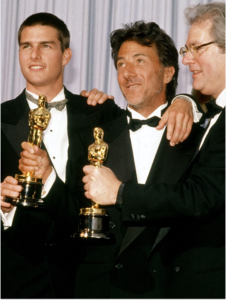
From left Tom Cruise Dustin Hoffman and director Barry Levinson with Oscars for Rain Man 1989
When actor Timothée Chalamet said“What is this Earth without art? It’s just a rock,” he truly encapsulated an important message: without an enjoyment of human creativity and input, our lives would be dull.
It is our own originality and sensibility that allows us to make and share meaningful art with the world, which is why it is very worrisome to see the rise of AI in creative industries like cinema and television, which are built on the imagination.
The human aspect and real-world connections built by a shared enjoyment of a movie is essential to keeping the industry alive. Will audiences really bond over AI content?
As the audience we only get to see the final result of the hard work that people – often hundreds or even thousands when it comes to large-scale projects – put into a single feature film. To make a movie, it is not only actors and producers who are needed, but screenwriters, production designers, art directors, prop masters, camera operators and many more.
But how is the number of roles needed for the creation of a film about to change? According to a UK study from the Queen Mary University of London that took place in 2024, more than two-thirds of those working in the creative industries believe that AI has become a threat to their job security.
There have been some victories in limiting the impact of AI. For example, writers and actors in Hollywood demanded stricter regulations around the copyright of their work to ensure that it is workers who are able to control the new technology within the writing process. Even though the Oscars banned AI from winning awards for acting and writing as well, the issue keeps growing.
This is particularly visible in the grey area surrounding intellectual property and copyright, because AI “stealing” ideas from creative workers is an unprecedented challenge. These have led to several debates regarding ownership and authorship in our changing times.
Some might argue that AI has made production easier and more efficient, and helps independent filmmakers with smaller budgets realise their projects. For example, director Doug Liman (The Bourne Identity), is embracing AI in his upcoming Bitcoin biopic Killing Satoshi, using it to create backgrounds and locations and to “adjust” performances.
Harbingers’ Weekly Brief
Subscribe to the Harbingers’ Weekly Brief, a newsletter written by the editorial board of Harbingers’ Magazine, the world’s youngest newsroom, delivered to your inbox every Monday morning.
![author_bio]()
![author_bio]()


But, on a larger scale, AI cuts jobs and kills creativity. It leaves artists and production workers wondering if their jobs will even exist in ten or 15 years’ time.
In the future, I want to be working in a creative environment, whether that be film or music. I believe that the main purpose of working in such a field is to bring people together and give them something to relate to and enjoy.
My hope is that if AI becomes genuinely prominent in new films, we will reject it and stand up for works that have been fully made by people. After all, our world is truly defined by the creative contributions made by humans, so we must not let society lose that value.

Edited by:

© 2026 The Oxford School for the Future