



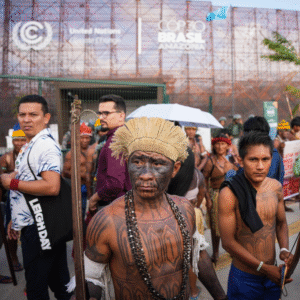
17-year-old Varvara analyses progress in countries’ attempts to reduce emissions amid the ongoing climate crisis
The Paris Agreement of 2015 was implemented by all member states of the UN almost exactly ten years ago, on 12 December. Under the United Nations Framework Convention on Climate Change (UNFCCC), this agreement is a landmark accord, setting out a shared strategy to combat climate change and address it as a global challenge. The deal was quite ambitious – some countries have shown progress and dedication, others have seen a decline in improvement.
The framework focuses on reducing greenhouse gas emissions and lowering global temperatures, and establishing commitment to action transparency, promotion of climate action and financial support. While the agreement does not have a fixed expiry date, the UNFCCC is monitoring progress and hopes to see an advance in action from all countries.
Harbingers’ Weekly Brief
Subscribe to the Harbingers’ Weekly Brief, a newsletter written by the editorial board of Harbingers’ Magazine, the world’s youngest newsroom, delivered to your inbox every Monday morning.
![author_bio]()
![author_bio]()


This month, officials, world leaders and climate activists gathered at COP30, the latest UN climate conference, held in the Amazonian city of Bélém, Brazil. So it’s certainly time for reflection and to review what progress has (or hasn’t) been made since 2015.
Here’s a breakdown of the initial goals of the Paris Agreement:
- Long-term climate goals: Limit global temperature increase to below 2°C; reach global peaks of greenhouse gas emissions as soon as possible; and achieve carbon neutrality.
- Adaptation: Enhance adaptive capacity, strengthen resilience and reduce vulnerability to climate change, by engaging with all parties equally.
- Binding commitments: Countries must communicate and maintain a ‘nationally determined contribution’ (NDC), which should be updated every five years and be as ambitious as possible.
- Finance: Developed countries must provide financial aid to developing countries, including for improving technology.
- Transparency and compliance: This is required to provide clarity on progress and contributions made by all parties.
- Awareness: Increase education, public awareness and public access to information.
Progress so far
The ambition of keeping global temperature rise below 2°C, ideally 1.5°C, is getting further out of reach. Global greenhouse gas emissions have not yet peaked, and 2023 was named the hottest year on record.
Despite growing awareness and investment in renewable energy, the world is still on a trajectory towards surpassing the 1.5°C limit within the next decade if drastic changes are not made.
While some regions have taken significant steps and proved themselves dedicated to the agreement, others are behind and have put action on hold. For instance, Europe has led the way, committing to a large-scale transition to renewable energy and setting legally binding net-zero emissions targets for 2050.
Significant decline in coal use and reduced energy consumption resulted in an 8% drop in the European Union’s total net greenhouse gas emissions in 2023. Europe is actively working on interim targets for 2030 and 2040.
Meanwhile, in President Trump’s first and second terms, the US withdrew from the Paris Agreement, annulling all the targets set by Barack Obama and then by Joe Biden for the upcoming years. The current Republican government is putting numerous obstacles on all environmental works, which will significantly slow down any emission reductions in the US.
Another country that is classified as “highly insufficient”, according to the Climate Action database, is China, with emissions remaining high in 2024 after a post-Covid surge in fossil fuel use. Construction of coal power plants reached its highest level in a decade, but, on the plus side, electrification in transport reduced oil demand.
Regardless of the recession in some countries’ efforts, nearly all UN members submitted a Nationally Determined Contribution (NDC) by 2023.
Budgets and priorities
A decade after the Paris Agreement, the question of finance remains crucial in climate action strategy. Wealthier nations agreed a $100bn climate finance goal to help developing countries cut emissions and adapt to climate impacts – a goal that was met in 2022, marking an important step of the agreement.
However, the pace of progress has significantly slowed since then, due to new economic and security challenges, such as the war in Ukraine. Following Russia’s full-scale invasion in 2022, NATO’s military expenses have increasedfrom 2% of GDP annually to 5%.
This directly affects the focus on climate action and challenges financial investment in developing nations. Although private investment in climate change mitigation has increased, reaching its peak in 2021 at 0.64% of GDP,it has since been facing a slight decline due to gas supply problems and geopolitical instability, thereby increasing risk for investors.
These sudden changes take an additional toll on developing nations, which are struggling from natural and economic disasters while lacking the promised financial net.
Other strategic aspects of the Paris Agreement, such as transparency and adaptation, have been progressing steadily. Through regular reporting and cooperation between developed and developing nations, climate action has been enhanced and solidified.
UN officials emphasise that honesty, in this case, has significant strategic value: “Transparency is not just about reporting – it’s about enabling national transformation and ensuring the Paris Agreement delivers results,” said UN Climate Change executive secretary Simon Stiell.
However, climate action progress is not only defined by governmental steps and strategies, but also citizens and their concerns. Raising awareness across the world has become a crucial step in combating climate change, as people become more and more alarmed by rising sea levels, the spread of disease, and other environmental and humanitarian crises.
In summary, the Paris Agreement remains a milestone and a reflection of the world’s progress concerning climate action. Having met financial goals and encouraged adaptation within lower economically developed countries, projections for the upcoming years are realistically positive – but still challenging.
Following the latest State of the Global Climate report, UN secretary general Antonio Guterres claimed that the Paris goals are achievable but more must be done. He said: “Our planet is issuing more distress signals – but… limiting long-term global temperature rise to 1.5°C is still possible. Leaders must step up to make it happen – seizing the benefits of cheap, clean renewables for their people and economies.’’
The coming decade will determine whether nations can turn commitments into significant change, keeping the Paris Agreement alive and allowing it to fulfill its purpose.

Edited by:

© 2026 The Oxford School for the Future