Harbingers’ Magazine is a weekly online current affairs magazine written and edited by teenagers worldwide.
harbinger | noun
har·bin·ger | \ˈhär-bən-jər\
1. one that initiates a major change: a person or thing that originates or helps open up a new activity, method, or technology; pioneer.
2. something that foreshadows a future event : something that gives an anticipatory sign of what is to come.
We and our partners may store and access personal data such as cookies, device identifiers or other similar technologies on your device and process such data to personalise content and ads, provide social media features and analyse our traffic.
Growing up in Canada, a country with a globalised idea of culture, I have found that my own culture easily becomes overshadowed and it is difficult to learn about my ethnic background.
This feeling of displacement from one’s own culture is partly due to the increasing rate of individuals being uprooted from their community and finding connection in the culture(s) of their immediate vicinity. This experience is common in modern Canadian society due to the wide ethnic spread of people in the country’s provinces.
Being in tune with one’s own culture is synonymous with knowing and being comfortable with the roots of your complicated identity. There are a few ways that multicultural individuals can go about achieving this, but the best way to feel true contentment is to seek out your cultural foundations, with the ultimate goal of accepting yourself.
I was born in Canada and have spent most of my life here, so I have experienced both physical and emotional disconnection from my family in India, and thus overall Indian culture. This has made me struggle to truly empathise with many South Asian communities, both inside and outside the West. That lack of connection can be attributed to my lack of knowledge and understanding.
As a third-culture kid, it is crucial that I understand my roots, so that I can accept who I am, and hopefully initiate productive conversations in the future. It is important for young people to learn about their cultures, to avoid the “noise pollution” that confuses the discovery of a strong personal identity.
Harbingers’ Weekly Brief
Subscribe to the Harbingers’ Weekly Brief, a newsletter written by the editorial board of Harbingers’ Magazine, the world’s youngest newsroom, delivered to your inbox every Monday morning.
See you on Monday!
Ooops - please try again.
Studying Indian history
Many of our parents who emigrated to Canada came in the hope of having a better life, and, in my family’s case, to avoid the religious conflicts that came with living in India.
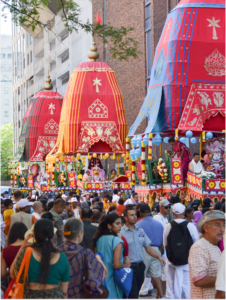
Growing up, understanding my cultural identity as an Indian-Canadian was difficult. The only information I had of my Indian heritage were oral traditions from my parents and grandparents – mantras sung in the morning, or religious stories told at bedtime. We also took occasional trips to visit my grandparents in Gujarat. It felt like I only ever got to hear about my heritage, but never experienced it first-hand.
Canada is composed of numerous communities and subcultures, and diversity here has increased since my parents emigrated in 2002. Diversity tends to have positive connotations. However, in the context of enriching one’s understanding of a country like India that has experienced so many changes, the sources for any real learning are scarce.
The history of India and the evolution of South Asian cultures is a huge subject. Attempting to educate myself on my background is not easy, since scholarsand Indians around the world are still investigating how India developed, and in what direction it is heading.
Developments in religious and spiritual recreation and the increased popularity of Indian traditions in the West produces a politically noisy environment where people value expression (looking outwards) over personal truths (looking inwards).
Also, people lack the self-determination to discover how their culture affects them and the world around them.
As a member of the new generation, who should I take knowledge from? South Asians in Canada or the media, who all bring different points to the table, or outdated research that has been constantly changing over the past century?
Even an outsider can see that, whether learning about religious and spiritual doctrines, historical figures or scientific advancements by Vedic scholars, India is full of enriching narratives – and yet it remains untouchable to Indians brought up in the West.
A possible solution
Initially, my knee-jerk reaction to my lack of knowledge was to hyperfixate on the latest depictions of Indian history in the media, and attempt to puzzle together why that makes sense in relation to the present.
But this is not an effective approach. Hyperfixating on specific information and relying on surface-level archetypes is what the media does best. But it does a poor job of telling the complex, dynamic stories that are often harder to digest.
It is up to individuals to be their own navigators. In the modern day, blindly absorbing the influx of information endorsed through digital perspectives is the same as following outdated ideologies that are incapable of reshaping the world.
When I was younger, I enjoyed immersing myself in fictional tales, traditional music and recitations of parables and poetry at my grandmother’s home. Now, as a teen, I am old enough to know that the real world is not so simple.
Even though it is daunting and I feel unsure, I want to have clarity and take accountability for what is happening in the world.
Abiding by the stories shared by communities who are not directly involved with India is detrimental to the new generations of Indians and South Asians growing up in the West.
As I approach adulthood, it is intimidating to see how disconnected I am from my culture, and therefore my roots. I have developed a new perspective to challenge this fear: as long as I am trying, I have a higher chance of reaching home than if I never tried at all. For me, there can be no bigger dream than going home.
Born in 2008 in Ontario, Canada, Siya is currently studying in the city of Mississauga.
She is passionate about writing and literature, and enjoys writing about anything new that relates to her academic topics of interest, such as neuroscience and branches of ecology, as well as the humanities.
In her spare time, Siya enjoys dancing, reading and working on creative projects.
She speaks Hindi (her first language) and English.
🌍 Join the World's Youngest Newsroom—Create a Free Account
Sign up to save your favourite articles, get personalised recommendations, and stay informed about stories that Gen Z worldwide actually care about. Plus, subscribe to our newsletter for the latest stories delivered straight to your inbox. 📲
We use cookies to ensure that we give you the best experience on our website. If you continue to use this site we will assume that you are happy with it.