



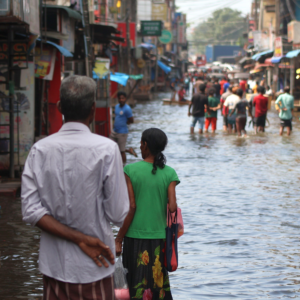
17-year-old Lisindi Liyanage explores how Sri Lanka is recovering from last November’s deadly cyclone
Cyclone Ditwah hit Sri Lanka four months ago, on 28 November 2025, causing heavy flooding and multiple landslides across the country. It was one of the worst disasters to strike the island in more than 20 years, affecting 2.3 million people, with 639 confirmed dead, and 193 reported missing in all 25 districts.
When the cyclone struck, those who had multistorey homes moved everything they could to safety and immediately evacuated while others fled to temples, schools or community centres that allowed them to seek temporary refuge.
Harbingers’ Weekly Brief
Subscribe to the Harbingers’ Weekly Brief, a newsletter written by the editorial board of Harbingers’ Magazine, the world’s youngest newsroom, delivered to your inbox every Monday morning.
![image]()
![author_bio]()
![author_bio]()


The worst affected areas were Puttalam District in the north-west, as well as Kilinochchi District in the north. Unfortunately, the damage inflicted was greater than anyone could have imagined.
Roughly 1.1 million hectares, which is 20% of the land mass of Sri Lanka, was flooded, approximately 1,200 landslides were triggered, more than 5,300 houses were fully destroyed and over 81,000 houses were damaged.
Moreover, many homes were buried under thick layers of mud and debris as a result of the landslides; many victims lost access to necessities such as food, water, gas and firewood; and many children lost their books and school supplies.
Personal stories
A woman and her family who live in Kotikawatta, a suburb of Colombo that floods frequently, was greatly impacted by the floods. When she has experienced flooding in the past, she and her family have gone to Galle to stay with her sister until the storm has subsided.

She told Harbingers’: “When we were finally able to come back, everything was buried in mud and debris.” In the end, she and her family were forced to relocate to another home and their car was badly damaged.
Another survivor, a technician from Gampaha District in the west of Sri Lanka, said that the experience was terrifying and that it all happened quickly. “I had to leave immediately and go to my sister’s in Galle,” she said. Galle, which is on the south coast, wasn’t as badly affected as other areas.
When she arrived in Galle she tried contacting neighbours, but her efforts were futile. After three worrying days, she returned to Gampaha where the ground floor of her home was buried in thick mud and debris.
A car mechanic from Badulla District, the central hill region, told Harbingers’ that he and his family immediately evacuated to a nearby temple for shelter. Within a few days, the Red Cross provided them with tents, food, clean water, blankets and the hope that they could rebuild their lives.
“Our home was completely destroyed and my children lost their schoolbooks and supplies,” he said.
“It breaks my heart to know I cannot support my children and provide them with the school supplies they need.”
International assistance
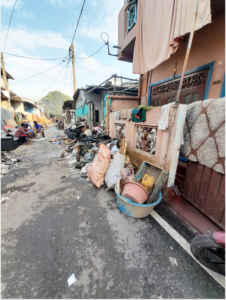
Cleaning up part of Colombo, Sri Lanka’s capital, after Cyclone Ditwah.
Sri Lanka has received approximately 85 billion Sri Lankan rupees in international assistance, spearheaded by India’s Operation Sagar Bandhu, which provided $450m as well as critical infrastructure support and field hospitals.
Substantial institutional funding included $206m from the International Monetary Fund (IMF), $120m from the World Bank and $4.5m from the UN Central Emergency Response Fund to address immediate humanitarian needs.
Other major contributors included the United States ($4m), Japan ($2.5m), Australia (AUD 3.5m), and China ($1m), while regional neighbours such as Nepal, Bhutan and the Maldives provided cash and materials. The Singapore Red Cross launched a fundraising campaign, supplemented by a promise of $100,000 from the Singapore government.

Edited by:

© 2026 The Oxford School for the Future