Harbingers’ Magazine is a weekly online current affairs magazine written and edited by teenagers worldwide.
harbinger | noun
har·bin·ger | \ˈhär-bən-jər\
1. one that initiates a major change: a person or thing that originates or helps open up a new activity, method, or technology; pioneer.
2. something that foreshadows a future event : something that gives an anticipatory sign of what is to come.
We and our partners may store and access personal data such as cookies, device identifiers or other similar technologies on your device and process such data to personalise content and ads, provide social media features and analyse our traffic.
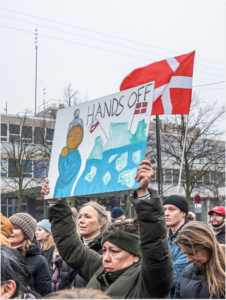
In early January, the White House announced that President Trump was discussing “options” to acquireGreenland, a self-governing territory within the Kingdom of Denmark, sparking widespread condemnation from Greenlandic, Danish and other European leaders.
Trump has calledthe acquisition of Greenland a national security priority, in order “to deter our adversaries in the Arctic region”, claiming the island “is covered with Russian and Chinese ships” and that Denmark does not have the capacity to protect it. This has prompted concern across Europe over what Trump’s ambitions may mean for the continent.
In a joint statement on X released by the Danish Prime Minister’s Office, the leaders of France, Germany, Italy, Poland, Spain and the UK expressed their collective support for the Greenlandic people’s right to determine their own status, adding that Greenland’s security must be ensured collectively by NATO.
Greenland’s prime minister Jens-Frederik Nielsen added at a press conference alongside the Danish prime minister, Mette Frederiksen, that if his nation had to “choose between the US and Denmark here and now, then we [Greenland] choose Denmark”.
Harbingers’ Weekly Brief
Subscribe to the Harbingers’ Weekly Brief, a newsletter written by the editorial board of Harbingers’ Magazine, the world’s youngest newsroom, delivered to your inbox every Monday morning.
See you on Monday!
Ooops - please try again.
On 16 January, small numbers of troops from several NATO allies arrived in Greenland in what officials described as a largely symbolic deployment to show support for Denmark and Greenland’s territorial integrity. In response, Trump announced a 10% import tariff on goods from the eight countries who had sent troops.
Under NATO’s Article 5, an armed attack on any of its 32 members is considered an attack against all.
A US invasion of Greenland, which would be a breach of Denmark’s sovereignty, would effectively end the transatlantic alliance, given Washington’s position as the military and financial backbone of the organisation.
Greenland, the world’s largest island, is located within the Arctic Circle between the Atlantic and Arctic Oceans. Geographically, it is part of North America, lying to the north-east of Canada and west of Iceland, but has been politically linked to the Kingdom of Denmark since 1814.
Its location has long been seen as an asset for the Americans, with the US presence in Greenland dating back to the Second World War, when a treaty granted Washington the authority to establish and maintain military installations in exchange for defending the island.
The US later built bases across Greenland, though it now has only one active installation, the Pituffik Space Base,which supports missile defense and space intelligence and has about 150 military personnel.
Greenland also offers the shortest air and sea routes between North America and Europe, positioning it as a strategic point in North Atlantic trade and security.
Approximately 80% of the island is covered by an ice sheet, the second largest in the world after Antarctica. But as climate change acceleratesice melt and threatens the presence of permanent sea ice, the strategic importance of Arctic shipping routes is increasing.
These routes – such as the Transpolar Sea Route – are expected to become increasingly navigable in the coming decades, with some forecastssuggesting they could be seasonally open to vessels by 2050.
At the same time, Greenland is also believed to house large reserves of oil and gas, along with untapped critical minerals used in electronics, renewable energy and military technologies, including graphite, copper and iron.
A US acquisition of the island would place substantial deposits under American control, offering potential economic and strategic advantages. While Trump has downplayed Greenland’s minerals as a key factor, former national security adviser Mike Waltz said in a 2024 interview that the administration’s interest in Greenland was “about critical minerals” and “natural resources”.
At the World Economic Forum on 21 January, Trump announced that a “framework of a future deal” over Greenland had been formed with NATO secretary-general Mark Rutte, reportedly involving discussions over mineral rights. The previously announced tariffs were also withdrawn.
Despite the US president’s softened rhetoric, Danish prime minister Mette Frederiksen has maintained a cautious attitude regarding a potential takeover of Greenland.
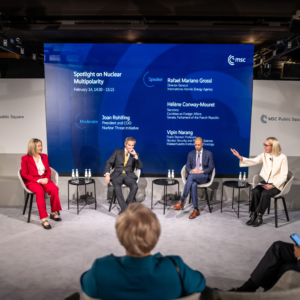
“Everybody asks us, do we think it’s over? No, we don’t think it’s over,” she shared during a panel discussion at the Munich Security Conference in mid-February. She added that she believes Trump’s desire to acquire Greenland is “unfortunately, the same”.
Frederiksen explained that a working group between Washington, Copenhagen and Nuuk has been established to discuss security concerns in the Arctic. However, she reiterated that “there are red lines that will not be crossed. And we [Denmark and Greenland] will stick to our strategy.”
Born in 2009 in Hong Kong, Matthew is currently studying for the International Baccalaureate Diploma Programme (IBDP). He is deeply passionate about social politics, and has plans to study law, international relations or political science at university. He is also a self-proclaimed book worm and cinema enthusiast.
🌍 Join the World's Youngest Newsroom—Create a Free Account
Sign up to save your favourite articles, get personalised recommendations, and stay informed about stories that Gen Z worldwide actually care about. Plus, subscribe to our newsletter for the latest stories delivered straight to your inbox. 📲
We use cookies to ensure that we give you the best experience on our website. If you continue to use this site we will assume that you are happy with it.